
Pipe jacking: trenchless crossings with hydraulic jacks
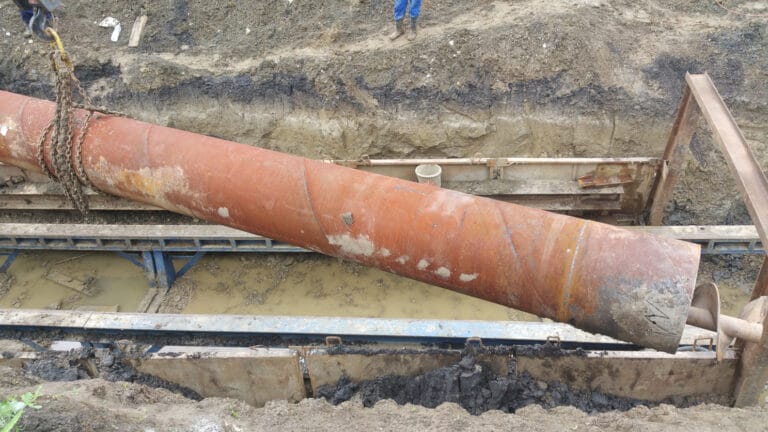
We carry out trenchless crossings by pipe jacking: pipes are pushed through the ground with hydraulic jacks, from a launch pit to a reception pit, without open trenches. For example, we installed a DN800 steel pipe over 92 metres this way.
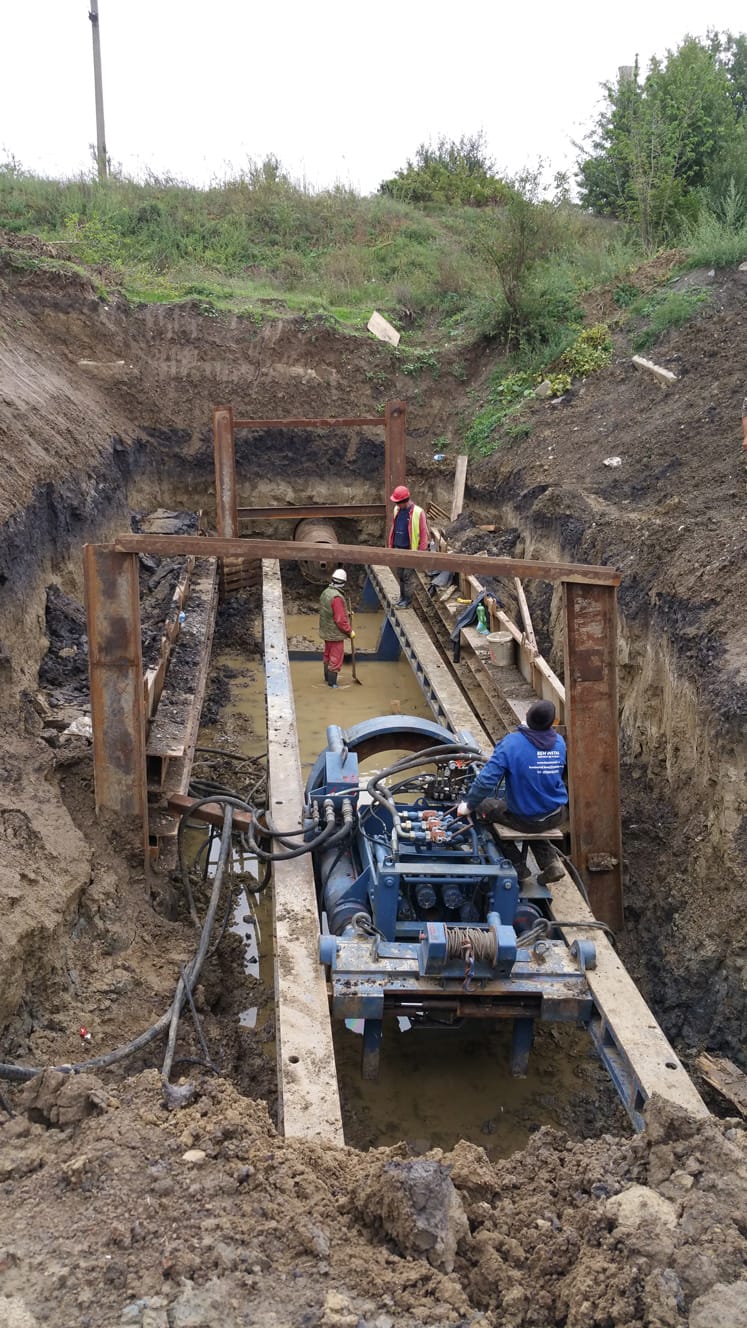
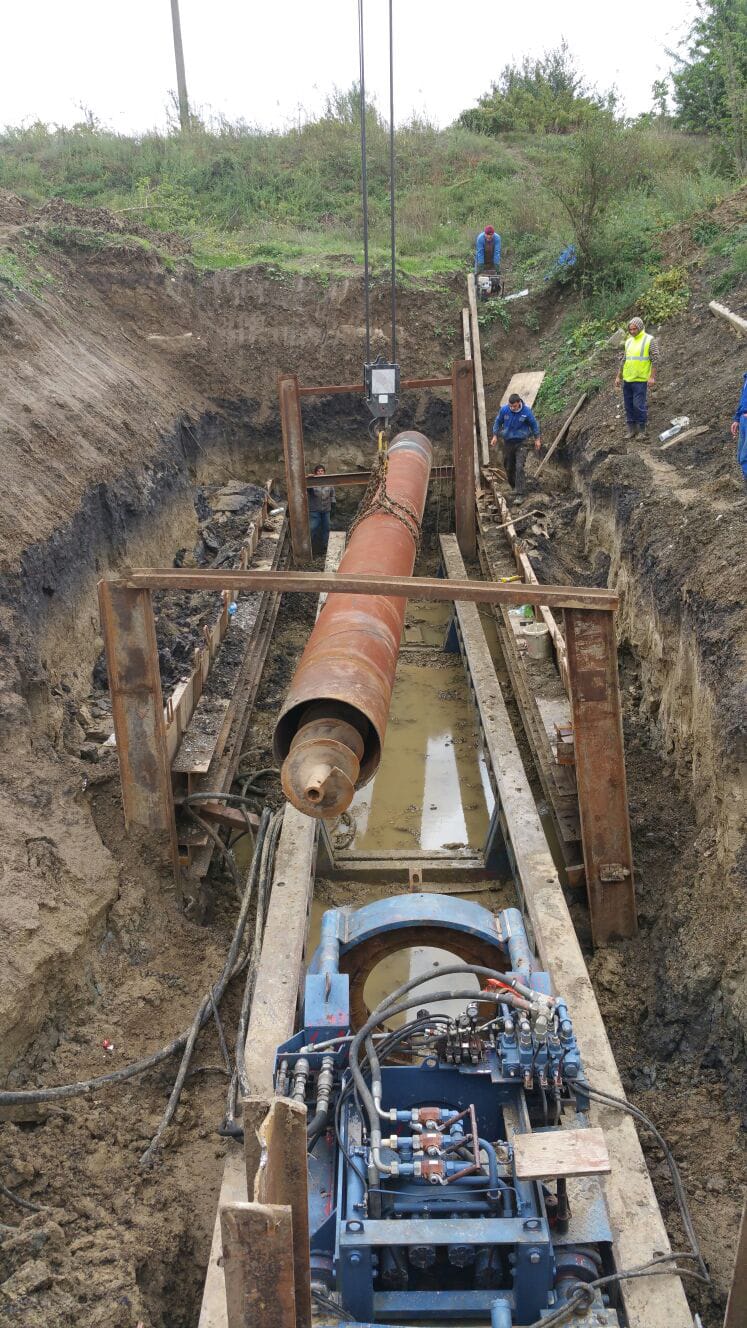
Pipe jacking is a non-directional trenchless method. Hydraulic jacks in the launch pit push the pipes one after another, while the soil at the face is removed through the inside of the pipes as they advance.
The pipes can be concrete, clay or steel. The method is used on short, straight runs in stable soils.
How a pipe jacking crossing is done
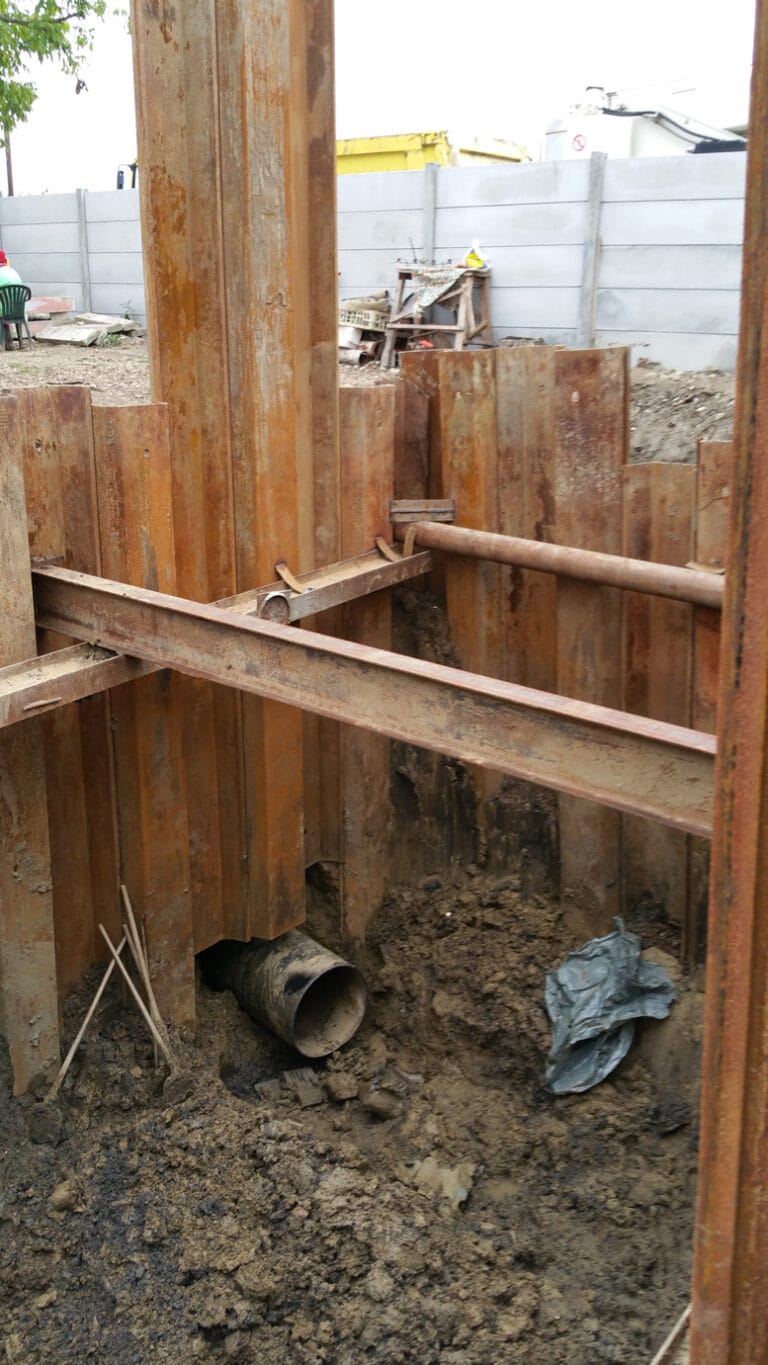
- We dig the launch pit and the reception pit and shore them.
- We install the hydraulic jacks and the thrust wall in the launch pit.
- We set the first pipe on the line and gradient from the design and push it with the jacks.
- The soil at the face of the pipe is removed through the inside as the pipe advances.
- We add pipe after pipe until the first one reaches the reception pit.
When we choose pipe jacking, and when we don't
Suitable for:
- short, straight runs under roads, railways or industrial sites;
- large-diameter sewer pipes and casings;
- stable soils;
- concrete, clay or steel pipes.
Not suitable when:
- the route has to bend around obstacles or curve; then we choose horizontal directional drilling;
- the soil is unstable;
- the route is much longer than the method’s typical lengths.
Pipes, lengths and applications
- Pipes: concrete, clay or steel.
- Typical lengths: up to 60–80 m, depending on diameter and soil. We have also completed a 92 m crossing with a DN800 steel pipe.
- Applications: sewerage, water and casings for other underground networks.
- Obstacles: roads, railways and industrial sites.
- Equipment: hydraulic pipe jacking rigs.
How we choose between pipe jacking, pipe ramming and directional drilling for roads, railways and rivers: trenchless crossings.
Frequently asked questions
How long can a pipe jacking crossing be?
Typical lengths are up to 60–80 m, depending on diameter and soil. We have also completed a 92 m crossing with a DN800 steel pipe.
What pipes can be used?
Concrete, clay or steel, chosen according to the network, the diameter and the loads above.
How is it different from pipe ramming?
In pipe ramming, the steel pipe is driven by a pneumatic rammer. In pipe jacking, the pipes are pushed by hydraulic jacks and the soil is removed through the inside. We recommend the method based on diameter, length and soil.
What information do you need for a quote?
The location, what needs to be crossed, the length, the pipe material and diameter and, if available, the geotechnical study and the site plan.
Pipe jacking projects
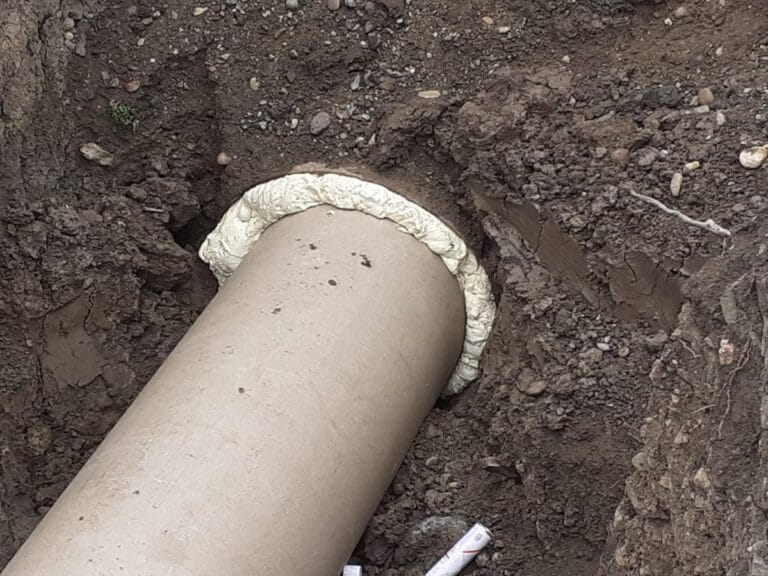
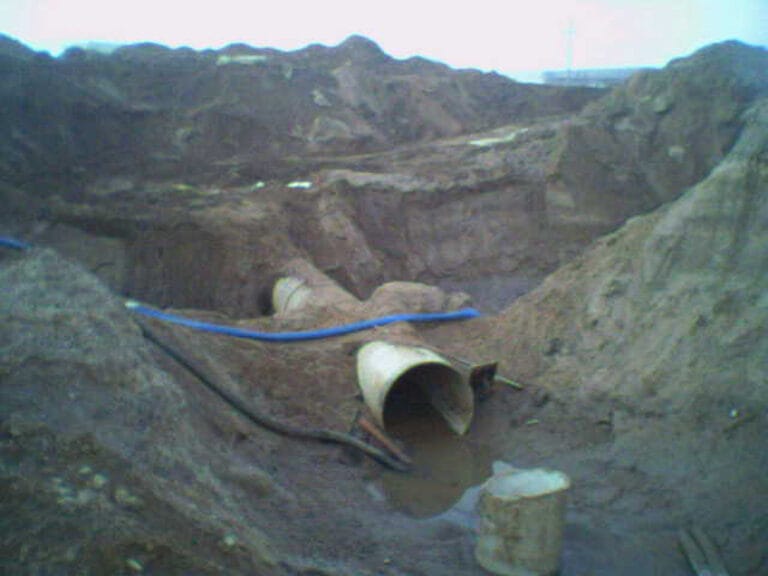
Some of our pipe jacking projects, including a DN800 steel pipe over 92 m.
Do you have a crossing to do?
Send us the location, what needs to be crossed, the length and the pipe diameter. We will propose the right method and send you a tailored quote.